Flixborough Chemical Explosion A Complete Process Safety, Management of Change, and Compliance Failure Case Study
Flixborough Chemical Explosion A Complete Process Safety, Management of Change, and Compliance Failure Case Study
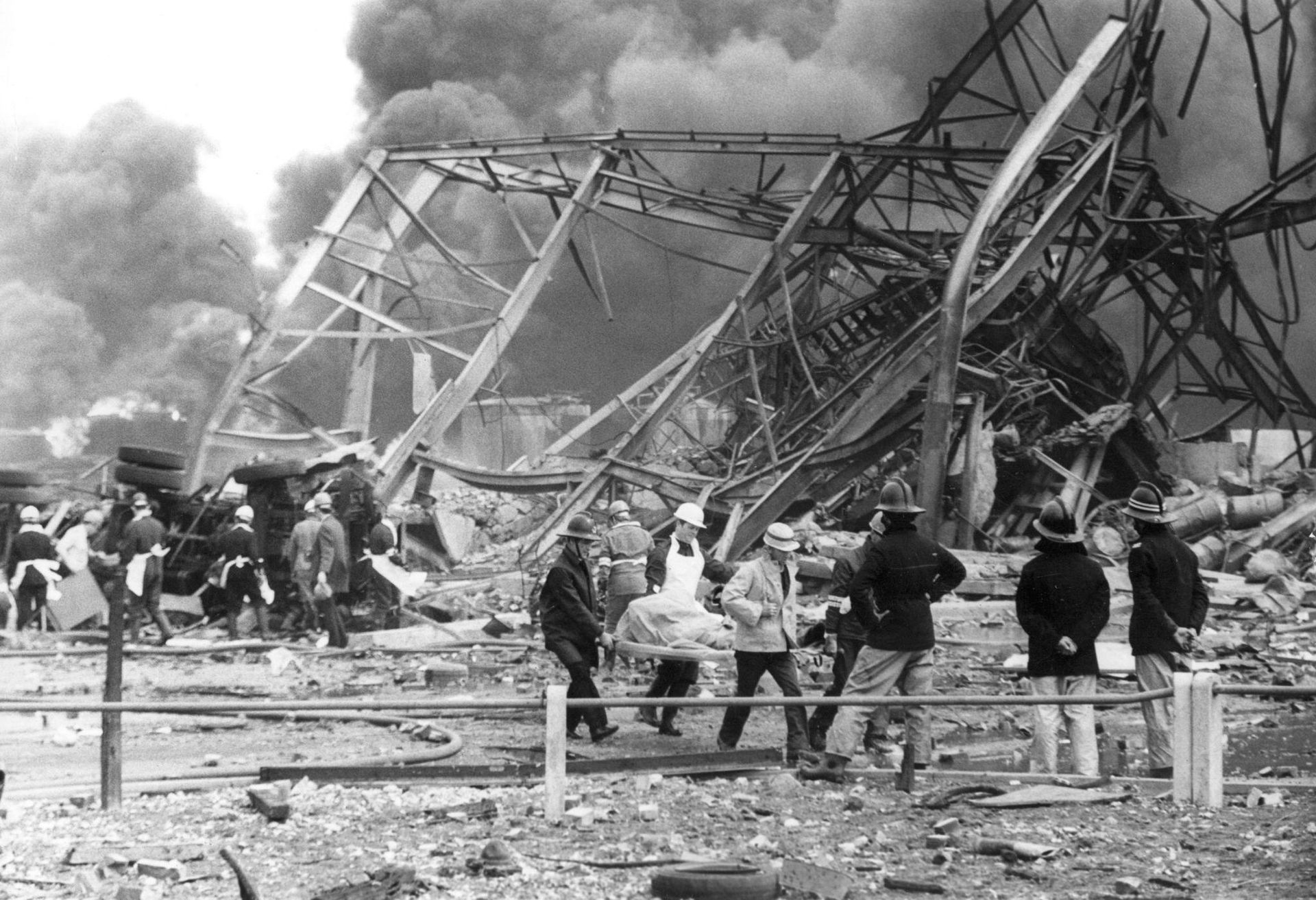
- Vapor cloud explosion (VCE): Massive release and ignition of flammable hydrocarbons. Total destruction of the chemical plant. The explosion was so powerful that buildings were destroyed several kilometers away. The blast was heard over long distances. The site was completely flattened.
2️⃣ Process and Chemical Involved.
The plant was producing caprolactam, a chemical used to manufacture nylon.
Key process materials included.
Cyclohexane (highly flammable hydrocarbon).
High-temperature and high-pressure processing conditions.
Cyclohexane presents similar risks.
Liquefied petroleum gases (LPG).
Light hydrocarbons in oil and & gas facilities.
3️⃣ Temporary modification to the plant.
A reactor in the process line developed a fault and was taken out of service.
To keep production running:
A temporary bypass pipe was installed.
The bypass was not designed by qualified engineers.
No proper drawings, stress analysis, or calculations were performed.
The modification was treated as “temporary” but remained in operation.
This decision became the single most critical failure.
4️⃣ Management of Change (MoC) Failure:
The Flixborough disaster is a classic example of management of change failure.
Failures included no formal risk assessment.
No hazard study (HAZOP).
No mechanical integrity verification.
No approval by a competent engineering authority.
5️⃣ Mechanical Integrity Failure:
The temporary bypass pipe.
Was poorly supported.
Was not designed for full operating pressure.
Failed under normal operating conditions.
When the pipe ruptured, large volumes of cyclohexane were released instantly.
A dense vapor cloud formed rapidly.
Lesson:
Mechanical integrity is a life-critical barrier, not a maintenance formality.
6️⃣ Release, Ignition, and Explosion
Sequence of events:
The temporary pipe ruptured.
A cyclohexane vapor cloud formed.
A cloud drifted across the plant.
Ignition occurred (source never conclusively identified).
A massive vapor cloud explosion followed.
The explosion destroyed process units.
Control rooms.
Nearby buildings and infrastructure.
7️⃣ Fatalities and Injuries:
Human impact:
28 workers were killed instantly.
36 people were seriously injured.
Hundreds injured in surrounding communities.
Many victims were:
Engineers.
Operators.
Maintenance personnel.
This highlighted how process safety failures kill workers, not just equipment.
8️⃣ Production and Business Damage
Consequences for the company included.
Total destruction of the plant
Permanent shutdown of operations
Severe financial losses
Loss of business continuity
The Flixborough plant never resumed operation.
9️⃣ Investigation Findings
The official investigation concluded:
The temporary bypass was the primary cause.
The modification lacked engineering design.
Management failed to recognize the hazard.
Safety systems were inadequate.
The accident was deemed entirely preventable.
References
Health and Safety Executive: The Flixborough Disaster: Report of the Court of Inquiry. London: HMSO, 1975.
Kletz, Trevor. What Went Wrong? Case Histories of Process Plant Disasters. 4th ed. Oxford: Butterworth-Heinemann, 1999.