Piper Alpha Disaster – 1988 (A Comprehensive Process-Safety and Compliance Failure Case Study for the Oil & Gas Industry)
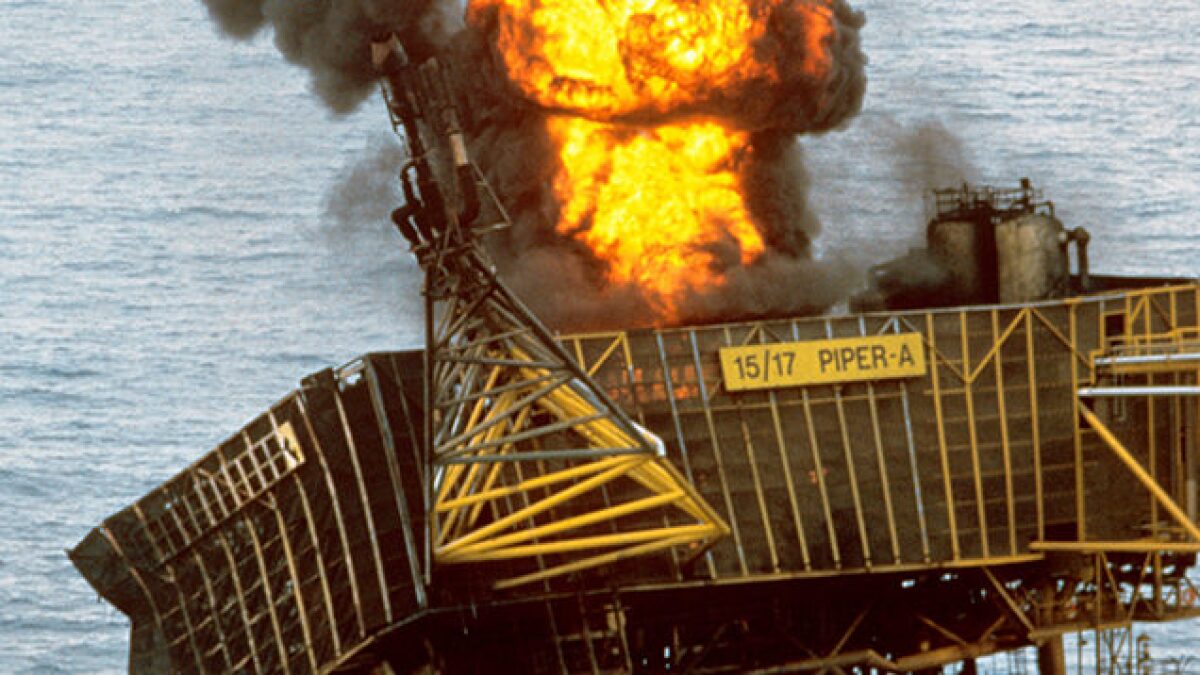
Piper Alpha Disaster – 1988 (A Comprehensive Process-Safety and Compliance Failure Case Study for the Oil & Gas Industry)
At its core, Piper Alpha was a process safety catastrophe. Process safety focuses on preventing loss of containment of hazardous energy or materials, especially hydrocarbons. Key failures included
Inadequate identification of major accident hazards.
Weak control of temporary operating conditions.
Poor management of barriers (engineering, procedural, and human).
There was no effective system to prevent escalation once containment was lost.
The platform had evolved from an oil-only facility to gas processing, but the process safety systems were never fully redesigned to reflect this higher risk.
Lesson:
Process safety must evolve with operational changes. Static systems in dynamic operations lead to disaster. Permit-to-Work (PTW) System Failure
The Permit-to-Work systemintended to be the final administrative safety barrier, collapsed completely.
Failures included:
Permits were paper-based and poorly controlled.
No centralized permit status visibility.
Shift handovers relied on informal communication.
Critical equipment status was not clearly highlighted.
As a result, operations personnel believed it was safe to restart equipment that was not mechanically complete. A PTW system that depends on memory and assumptions is a hazard, not a control.
Who Operated the Offshore Platform?
The platform was operated by Occidental Petroleum, one of the major oil companies at the time.
Operational responsibility included:
Platform safety management.
Permit systems.
Emergency response.
Training and competence of personnel.
However, safety accountability was fragmented, and operational control did not reflect the increasing complexity of gas processing operations.
Lesson:
Operators are fully responsible for safety performance, regardless of contractors or legacy designs. The Pressure Safety Valve (PSV) Had Been Removed.
A pressure safety valve (PSV) from one of the condensate pumps was removed for maintenance.
Critical facts:
The pump was left mechanically incomplete.
The open flange was temporarily sealed with a blind flange.
The blind flange was not designed to withstand full operating pressure.
The equipment should have been locked out and clearly tagged.
This single condition created a latent lethal hazard.
Lesson:
Removing a safety-critical device without robust isolation controls creates an unacceptable risk.
Failure to Communicate Critical Equipment Status:
The permit-to-work system failed to communicate the following:
The pressure safety valve was removed.
The pump was unsafe to operate.
This failure occurred during shift handover.
Permit filing.
Operational decision-making.
No visual, procedural, or system-based barrier prevented the error.
Lesson:
Critical safety information must never rely solely on human memory or paperwork. The pump was restarted. Due to production pressure.
Loss of the primary pump.
Incomplete understanding of maintenance status.
Operators restarted the standby condensate pump, believing it was safe.
This action directly exposed the open flange to full operating pressure.
Lesson:
Production-driven decisions without verified mechanical integrity are a direct route to disaster.
Gas Leak, Ignition, and Massive Explosion
Once restarted
High-pressure gas escaped from the open flange.
A flammable gas cloud formed rapidly.
Ignition occurred almost immediately.
The explosion:
Destroyed control systems.
Disabled emergency response.
Initiated multiple secondary fires.
Hydrocarbon flow from connected platforms continued feeding the fire.
Lesson:
Once containment is lost offshore, escalation is rapid and unforgiving.
Fatalities
The human cost was catastrophic
167 workers killed.
Only 61 survived.
Many fatalities occurred due to:
Smoke inhalation.
Fire exposure.
Inability to evacuate.
Emergency systems failed to support safe evacuation.
Lesson:
Every process safety failure ultimately becomes a life-safety failure.
Safety Culture Deficiencies: The platform’s safety culture was reactive and production-focused.
Key cultural weaknesses:
Safety is subordinated to output targets.
Inadequate questioning of unsafe conditions.
Workers are not empowered to stop operations.
Warning signs normalized over time.
Unsafe conditions became normal operations.
Lesson:
A weak safety culture converts risk into routine Safety Culture and Leadership Failure
Leadership failures included:
Tolerating unsafe practices.
Failing to enforce procedures.
Prioritizing production continuity
Lack of visible safety leadership
Senior management decisions directly influenced frontline risk.
Lesson:
Safety culture is created—or destroyed—by leadership behavior.