Level 2 Award in Confined Space Awareness
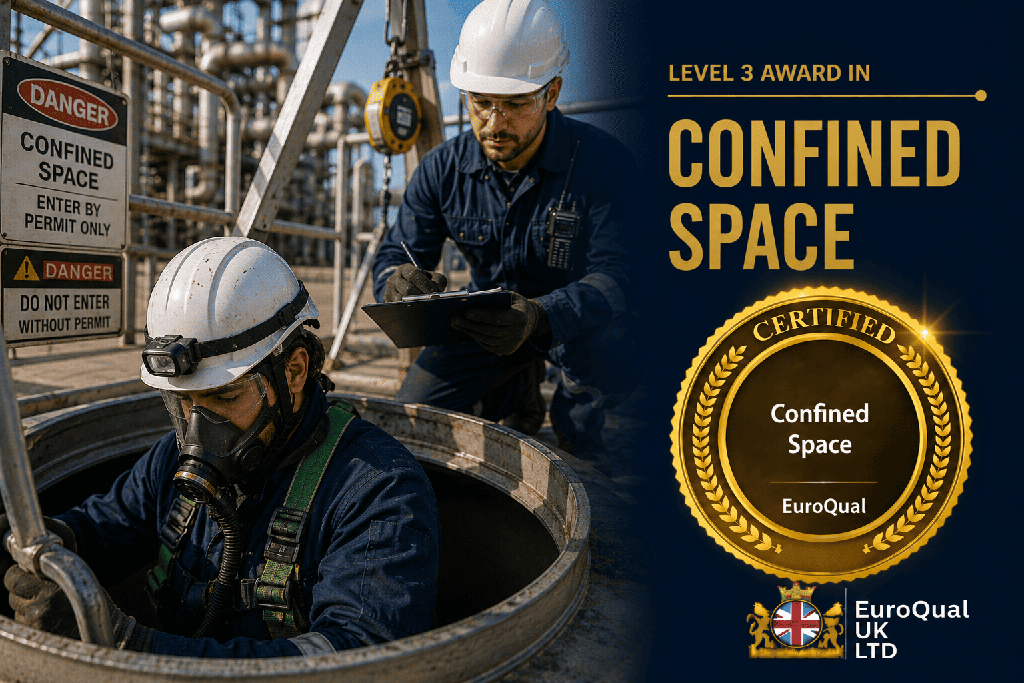
Level 2 Award in Confined Space Awareness
Course Overview
The Confined Space Safety course provides learners with essential knowledge and practical skills to work safely in confined or enclosed environments where atmospheric hazards, restricted entry/exit, and limited ventilation pose significant risks.
This program covers hazard identification, risk assessment, safe entry procedures, atmospheric testing, permit-to-work requirements, emergency response, and rescue awareness.
Learners gain the competency needed to support or execute confined space tasks in compliance with international safety standards and organizational procedures.
Course Topics
Definition and classification of confined spaces.
Hazards associated with confined spaces (atmospheric, mechanical, engulfment, etc.).
Risk assessment, hazard control, and safe work planning.
Entry requirements and confined space permit systems.
Roles and responsibilities: entrant, attendant, supervisor.
Atmospheric testing: oxygen, flammable gases, and toxic vapors.
Use of gas detection instruments and monitoring procedures.
Ventilation, isolation, and lock-out/tag-out (LOTO).
Personal protective equipment (PPE) and respiratory protection.
Communication, standby duties, and continuous monitoring.
Emergency response and confined space rescue principles.
Documentation, reporting, and post-entry review.
Who Should Enroll?
HSE officers and safety professionals.
Maintenance and operations technicians.
Workers performing tasks inside tanks, vessels, pits, manholes, silos, or tunnels.
Supervisors and team leaders overseeing confined space activities.
Permit issuers, attendants, and standby personnel.
Oil & gas, petrochemical, construction, wastewater, and industrial workers.
Anyone responsible for safe entry, monitoring, or rescue coordination.
Key Benefits
Clear understanding of confined space hazards and safe entry procedures.
Ability to conduct risk assessments and apply control measures.
Competence in atmospheric testing and monitoring.
Skills to follow PTW systems and regulatory requirements.
Increased awareness of emergency response and rescue protocols.
Improved workplace safety performance and compliance.
A recognized certificate enhancing employability in high-risk industries.
Ready to Enroll?
Start your professional development journey with this comprehensive course.